


Mold testing is a measurement. An accredited process samples the air and the surfaces in a building, a laboratory identifies whether mold is present, what type it is, and at what concentration, and you receive a written report you can act on. That is the whole service. It does not include cleaning anything up, and the distance between measuring a problem and being paid to remove it is the reason this guide exists. When the company offering the test is also the company that sells the removal, the number on the report and the size of the invoice start pulling in the same direction.
What a mold inspection actually tells you
The short answer is this: a mold inspection tells you whether mold is growing where it should not be, what kind it is, and how much of it is in the air compared with the air outside. A licensed assessor walks the property, looks for moisture and visible growth, and collects air and surface samples. An accredited laboratory analyzes those samples and reports the species and the spore counts. You end up with a document that describes your indoor air on a specific date, measured against an outdoor baseline taken the same day.
People reach for several different words, and most of them describe the same work. Mold inspection, mold testing, mold assessment, mold detection, and a mold air quality test all point at the same thing: find the moisture, sample the air and the surfaces, get the lab result, write the report. The label on the service page matters less than what the process produces, which is evidence rather than an opinion.
The report is the product. An independent assessment is finished when the findings are in your hands. There is no second phase where the same company arrives with equipment and a proposal, because the assessor does not do the removal. That single fact shapes everything that follows.
When a mold test is actually warranted
You do not need a test every time a room smells musty after a rainy week. You need one when a decision or a document depends on the answer. Three situations account for most of the honest reasons to test a building, and they hold true in any state.
- After water intrusion. A roof leak, a burst supply line, an appliance that overflowed, a slab that took on water in a storm. A leak that was dried slowly months ago has had that whole time to colonize behind a wall. That does not mean it did. A test tells you whether growth is still active and hidden where you cannot see it.
- Before you buy or sell. A pre-purchase assessment gives a buyer documentation and gives a seller a dated record of the building’s condition. In a transaction, a written result settles arguments that a conversation cannot.
- Symptoms that stay with the building. When the people who live or work in a space feel better away from it and worse inside it, the pattern points at the building rather than at something they carry everywhere.
The Self-Check That Costs Nothing
Leave the building for a weekend. If the congestion, the headaches, or the eye and throat irritation ease while you are away and return within a few hours of walking back in, that pattern points at the indoor environment rather than the season or an allergy that travels with you. It proves nothing on its own. It tells you whether a test is worth ordering.
Testing still does useful work even when you can already see the growth. Seeing mold tells you it is present. It does not tell you the species or the concentration, and you cannot judge either by looking, because there are always some mold spores in the air of any building. Visible growth can be harmless, or it can be a type and a level that matter. The CDC makes a narrow point here that is fair and worth stating plainly: you do not need a laboratory test simply to confirm that mold you can already see is there, and you should find and correct the moisture source regardless of what any test says. What that point leaves out is the part you actually act on. A lab identifies the type, measures the concentration, and compares your indoor air against the outdoor baseline, and that identification and severity, rather than the bare fact of presence, is what a real estate transaction, an insurance claim, or a post-remediation clearance requires in writing. Testing also does its clearest work where mold is hidden behind a surface you cannot open, which is where it usually starts.
Why the company that tests should not be the company that removes
The short answer is this: a firm that both tests for mold and removes it makes its money on the removal, so the test becomes the door to the sale. The people who decide whether a cleanup is needed are the same people who would be paid to perform it, and that incentive runs in one direction. It pushes toward finding a problem. A firm that only tests, and is legally or structurally barred from doing the removal, is paid the same fee whether your air comes back clean or alarming, so its finding has nothing riding on the outcome.
That is not a slogan about trust. It is a description of who gets paid, and for what. When you understand the money, the rest of the argument makes itself.
| The conflicted model | The independent model |
|---|---|
| One firm tests and removes | The assessor tests; a separate firm removes |
| Revenue depends on finding a problem | Revenue is the same whether the result is high or clean |
| The test is a sales lead | The test is the deliverable |
| No independent check on the cleanup | Post-remediation testing is done by someone who did not do the work |
How much that separation is protected depends heavily on where you live, and this is where a national picture has to be honest. Some states have written the separation into law. Others have written nothing at all, which means the only thing keeping the tester honest is the tester’s own business model.
Florida: the separation written into statute
Florida is the clearest codified example. The state licenses mold assessors under Chapter 468, Part XVI. Florida Statute 468.8414 sets the licensure requirement for the mold assessor who performs the assessment, and Florida Statute 468.8419 adds a twelve-month bar: a firm that assesses a property generally cannot also remediate that same property, and a firm that remediated a property cannot then assess its own work, within a twelve-month window. That is a state licensing rule with a statute number attached, and it applies in Florida only, not as national law. Most states do not have an equivalent, and a few, such as Georgia, have no mold licensing statute at all, so anyone can call themselves a mold inspector there with nothing separating the test from the sale.
The takeaway travels even where the statute does not. In a state that codifies the separation, the law does the work for you. In a state that does not, you have to ask the question the law would otherwise answer: does the company testing my air also earn money removing what it finds. Where the answer is no by the firm’s own design, you get the same protection Florida writes down, sourced from the business model instead of the statute book.
What the mold testing process looks like
A mold assessment is a measurement process from start to finish, and none of it involves removing anything. Here is what the assessor does on site.
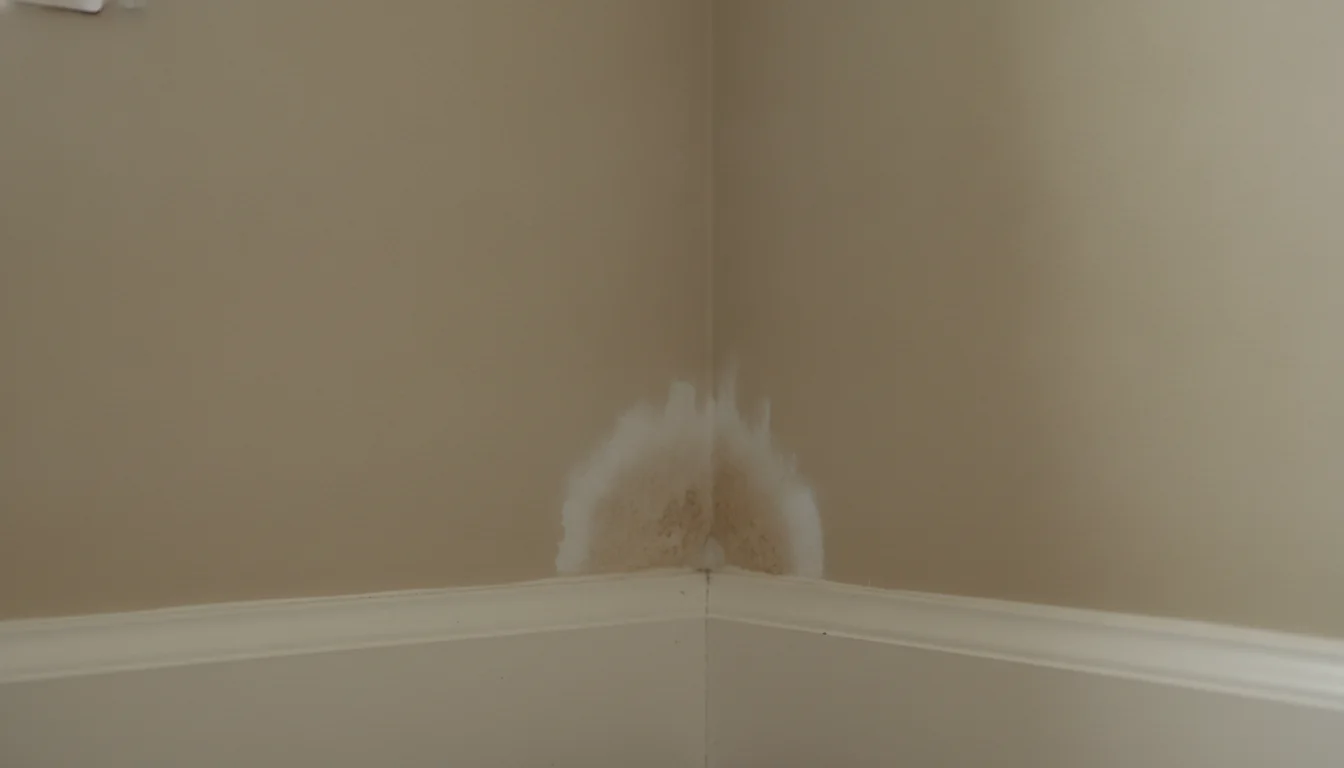
- Visual and moisture survey. The assessor looks for staining and growth and uses moisture meters, and sometimes an infrared camera, to find damp materials behind surfaces. The moisture almost always tells the story before the mold does, because mold is the symptom and water is the cause.
- Air sampling. Spore-trap samples pull a measured volume of air onto a slide. An outdoor control sample is taken the same day, because an indoor spore count only means something when it is compared against the air just outside the door.
- Surface sampling. Tape lifts or swabs from suspect spots confirm whether a stain is mold and what kind it is.
- Laboratory analysis. An accredited laboratory identifies and counts what the samples caught, using direct microscopy and, for bulk materials, methods such as polarized light microscopy. The lab produces the numbers, not the salesperson.
What comes back to you is a report with the spore types, the indoor and outdoor counts, the moisture findings, and a plain reading of what they mean together. If the evidence supports a cleanup, the report documents the case for one. The cleanup itself is a separate company’s job, and in a state like Florida, keeping those two companies separate is the point of the license.
A clean report is still a real result
Nothing found is worth what you paid for it. A clean report documents your air on a specific date, rules out a hidden active source behind the wall you were worried about, and gives a buyer or a seller something in writing to stand on. If the symptoms had been pointing at the building, a clean result tells you to look elsewhere, which is its own kind of relief and saves you from paying for a cleanup you never needed.
An independent assessor is paid the same whether your result is alarming or boring. That is the entire reason the model is built the way it is. When there is nothing to sell you afterward, a report that reads “you are fine” carries exactly as much weight as one that reads “you have a problem,” and you can act on both without wondering whether the answer was shaded to fit an invoice.
“Mold removal near me”: why the test comes first
The short answer is this: most people search for mold removal before they search for mold testing, because removal is what they think they need. It is the natural instinct. You smell something, you see a stain, and you want it gone. The trouble is that ordering a removal before an independent test means paying someone to fix a problem that the same someone gets to define, at a scope the same someone gets to set.
The report you actually need comes from the one company that cannot profit from the answer.
An independent test answers the question underneath the search. It tells you whether there is a problem, where it is, what type it is, and how large it actually is, before any crew quotes a price to remove it. If a cleanup is warranted, you hand that report to a remediation company and hold them to the scope it describes, instead of taking their word for both the diagnosis and the cure. When the work is finished, a separate post-remediation test confirms whether it worked, checked by someone who did not do the job and has no reason to say it went well. In Florida, that separation is not optional between the same firm and the same property inside a year. Everywhere else, it is a choice you get to make, and the independent test is how you make it.
Finding independent mold testing near you
Independent mold testing is local work, because someone has to walk the property, and the outdoor baseline has to be taken at your address on the day of the test. A national standard for how a report should be built, an accredited lab, licensed assessors, chain of custody, an outdoor control sample, gets applied one building at a time. When you search for mold testing near you, what you are really looking for is that standard, delivered by an assessor who does not also sell the removal.
AirMD, an independent environmental testing company established in 2007, tests and assesses for mold and does not perform remediation, and it covers a number of markets where humidity makes mold a recurring question. If you are in Florida, the city pages below lay out the specific service and local coverage, and the main mold testing service page explains the method in more depth.
- Mold testing in Boca Raton, FL
- Mold testing in Fort Lauderdale, FL
- Mold testing in Miami, FL
- Mold testing in Tampa, FL
- Mold testing in Naples, FL
- Mold testing in Jacksonville, FL
- Mold testing in Orlando, FL
Wherever you are, the rule is the same. Start with the measurement, keep it independent of the removal, and let the report tell you what, if anything, to do next.
Frequently asked questions
Do I need a mold test?
You need one when a decision or a document depends on the answer: after water intrusion, before you buy or sell a property, or when symptoms consistently ease away from a building and return inside it. You do not need a lab test merely to confirm that mold you can already see is present, and you should fix the moisture source either way. A test earns its cost when you need the type, the concentration, or a written record for a transaction, an insurance claim, or post-remediation clearance.
Can the same company test and remove mold?
It depends on the state, and independence matters regardless of what the law allows. In Florida, no: under the licensing rules in Chapter 468, Part XVI, a firm that assesses a property is generally barred from remediating that same property within twelve months, and the reverse holds too. Most states do not have that rule, so the same company legally can do both. When it does, the test becomes a sales lead for the removal. An independent assessor that only tests is paid the same whether the result is clean or alarming, which is why its finding is the one with nothing riding on the outcome. AirMD tests and assesses only. It does not remediate.
What does a mold test detect?
A mold test detects the types of mold present, the concentration of spores in the air, and how the indoor level compares with an outdoor baseline taken the same day. Air samples capture what is airborne, surface samples confirm whether a stain is mold and what kind, and a moisture survey locates the water feeding any growth. An accredited laboratory identifies and counts what the samples caught. The result is a written report describing what is in your air and where the moisture behind it is coming from, not a diagnosis of a specific illness.
How do I find independent mold testing near me?
Look for an assessor that tests and assesses only and does not also sell remediation, uses an accredited laboratory, takes an outdoor control sample the same day, and hands you a written report as the deliverable rather than a cleanup quote. In states that license mold assessors, such as Florida, confirm the assessor is licensed. AirMD is an independent environmental testing company that tests for mold without performing removal; you can start with the mold testing service page or a local city page to request an assessment for your property.