


You run the air conditioning most of the year in Boca Raton, and by late summer the house still feels heavy. Maybe a supply line under the kitchen sink dripped for a few weeks last spring. Maybe the condo you just closed on sat shut up through a humid season before you got the keys. You cannot tell whether you have a mold problem or an old-building smell, and an afternoon of reading online has made you more anxious, not more certain. What you want is a straight answer. The company that also removes the mold gets paid when it finds some, so for them the test is a sales lead; an independent tester earns the same fee whether your air comes back clean or alarming, which is why its answer is the one you can trust.

What a Boca Raton mold inspection actually is
A mold inspection in Boca Raton is a measurement, not a repair. A licensed mold assessor walks the property, looks for moisture and visible growth, collects air and surface samples, and sends them to an accredited laboratory. The lab identifies the mold present, counts the spores, and compares the indoor readings against an outdoor baseline taken the same day. You receive a written report: what is in your air, at what concentration, how that compares to outside, and where the moisture feeding any growth is coming from.
People use several words for this, and they describe the same work. Mold inspection, mold testing, mold assessment, and mold detection all point at the assessment: find the moisture, sample the air and surfaces, get the lab result, write the report. AirMD tests and assesses. It does not remove or remediate mold. That separation is not a company policy. Florida law requires it, and the rest of this guide explains why that matters to you specifically.
The report is the product. Everything AirMD is paid to do ends when the findings are in your hands.
When you actually need a mold test in Boca Raton
You do not need a test every time you smell something musty. You need one when a decision or a document depends on the answer. Three situations account for most honest reasons to test a home.
- After water intrusion. A roof leak, a pipe, a slab that took on water during a storm. A leak that was dried slowly six months ago has had 180 days to colonize. That does not mean it did. A test tells you whether it is still active and hidden behind the drywall.
- Before you buy or sell. A pre-purchase inspection gives a buyer documentation and gives a seller a record of the home’s condition on a specific date.
- Symptoms that stay with the building.
The Weekend Self-Check
Here is the self-check that costs you nothing. If the congestion, the headaches, or the irritation ease when you leave the house for a weekend and return when you walk back in, that pattern points at the building rather than the season or an allergy you carry everywhere.
Testing matters even when you can already see the mold. Seeing it tells you the mold is present. It does not tell you what species it is or how bad it is, and you cannot judge either by looking, because there are always some mold spores in the air. Visible growth can be harmless, or it can be a type and a concentration that matter. The CDC makes a narrow point here that is fair: you do not need a lab test simply to confirm that mold you can already see is there, and you should find and fix the moisture source either way. What that point leaves out is the part you actually act on. A lab test identifies the type, measures the concentration, and compares your indoor air against an outdoor baseline, and that identification and severity, rather than the bare fact of presence, is what a real estate transaction, an insurance claim, or post-remediation clearance requires in writing. Testing also does its clearest work where mold is hidden behind a wall you cannot open, which in a humid market like Boca Raton is where it usually starts.
Why Florida law separates the assessor from the remediator
The short answer is this: in Florida, the company that tests your mold is legally kept apart from the company that removes it, and that keeps the person measuring your air from having a financial stake in what the measurement says.
The Twelve-Month Bar
Florida licenses mold assessors under Chapter 468, Part XVI. Florida Statute 468.8411 sets the requirement for a licensed mold assessor to perform the assessment. Florida Statute 468.8419 adds the twelve-month bar: a firm that assesses a property cannot also remediate that same property, and a firm that remediated a property cannot then assess its own work, within a twelve-month window. That is not a marketing promise. It is a licensing rule with a statute number attached.
The one company legally barred from profiting off your mold is the one you want testing for it.
Read what that separation removes from the room. A firm that both tests and removes mold makes its money on the removal. The test is the door to the sale. When the same people who quote the cleanup also decide whether a cleanup is needed, the incentive runs one direction. Splitting the two roles is how the state closes that door.
| The conflicted model | The independent model |
|---|---|
| One firm tests and removes | The assessor tests; a separate firm removes |
| Revenue depends on finding a problem | Revenue is the same whether the result is high or clean |
| The test is a sales lead | The test is the deliverable |
| No independent check on the cleanup | Post-remediation testing is done by someone who did not do the work |
What the testing process looks like
A Boca Raton mold assessment is a measurement process, and none of it involves removing anything. Here is what the assessor does on site.
- Visual and moisture survey. The assessor looks for staining and growth and uses moisture meters, and sometimes an infrared camera, to find damp materials behind surfaces. In Florida the moisture almost always tells the story before the mold does.
- Air sampling. Spore-trap samples pull a measured volume of air onto a slide. An outdoor control sample is taken the same day, because an indoor reading only means something against the air outside your door.
- Surface sampling. Tape lifts or swabs from suspect spots confirm whether a stain is mold and what kind.
- Laboratory analysis. An accredited lab identifies and counts what the samples caught, using direct microscopy and, for bulk materials, methods such as polarized light microscopy. The lab, not the salesperson, produces the numbers.
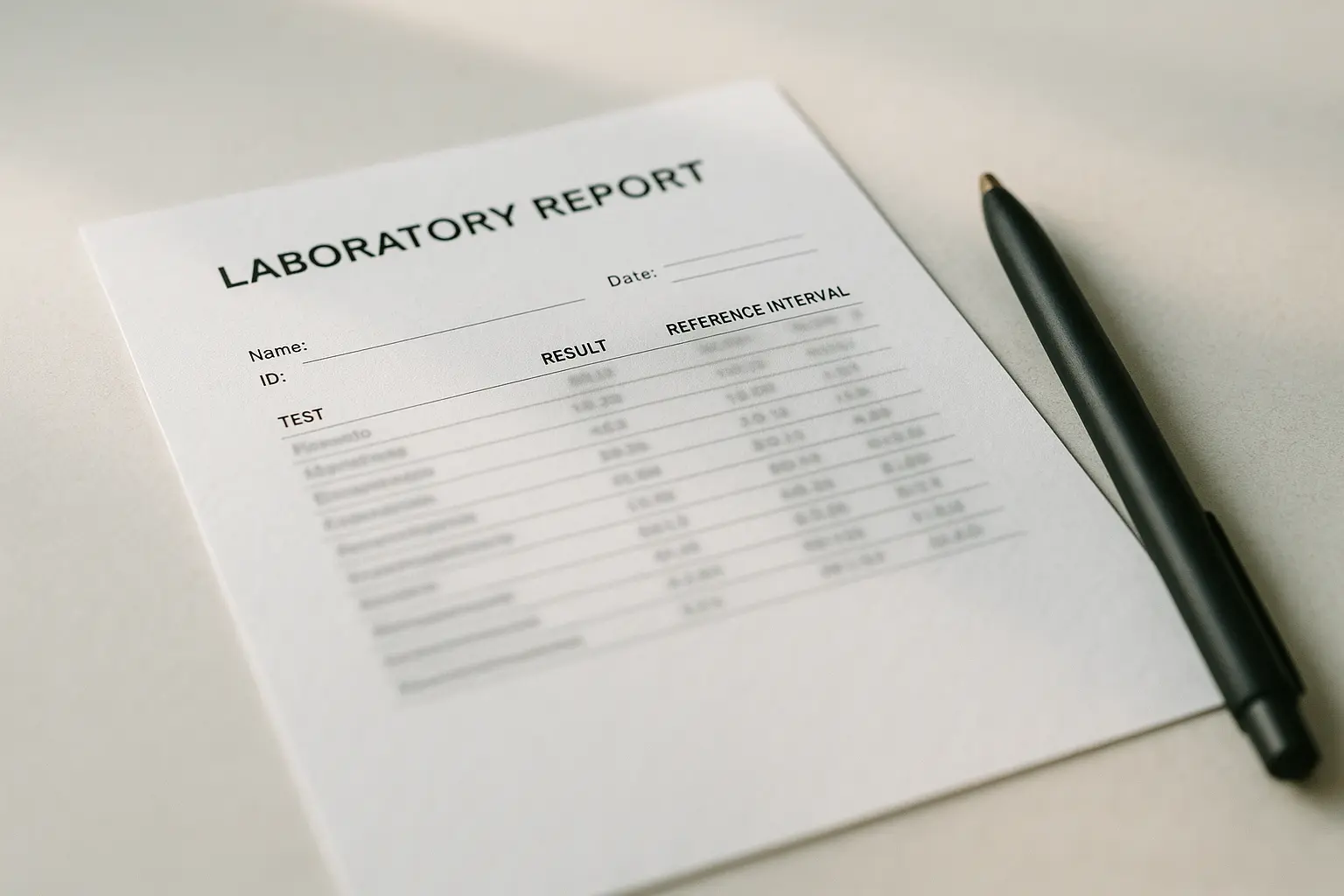
What comes back to you is a report with the spore types, the indoor and outdoor counts, the moisture findings, and a plain reading of what it means. If remediation is warranted, the report documents the case for it. The remediation itself is a separate company’s job, by law and by design.
What if the inspection finds nothing?
A clean report is a real result, and it is worth what you paid for it. It documents your air on a specific date, rules out a hidden active source behind the wall you were worried about, and gives a buyer or a seller something in writing to stand on. If the symptoms were pointing at the building, a clean result tells you to look elsewhere, which is its own kind of relief.
An independent assessor is paid the same whether your result is alarming or boring. That is the entire reason the model is built the way it is. When there is nothing to sell you afterward, “you are fine” is worth as much as “you have a problem,” and you can trust both.
What makes Boca Raton different
South Florida gives mold everything it needs. Boca sits in a coastal, high-humidity band where the air rarely dries out, and the air conditioning that keeps your home livable also creates cold surfaces where warm, wet air condenses. Ductwork, the back of a closet on an exterior wall, the space under a window unit. Those are the quiet spots where growth starts without a dramatic leak to announce it.

Condos and HOA communities add a documentation layer. When you sell a Florida home, disclosure obligations do not disappear because the listing says “as-is,” and a mold assessment gives you a dated record rather than a guess in a conversation. Buyers use the same report to make an informed offer, and in an insurance claim after water damage, independent testing is the documentation an adjuster can rely on. If you want to see the specific service and coverage for the area, AirMD’s mold testing in Boca Raton page lays it out, and the broader mold testing service page explains the method in more depth.
Frequently asked questions
Do I need mold testing to sell a home in Boca Raton?
Florida does not require a mold test to sell a home, but it does require you to disclose known material defects, and an “as-is” listing does not erase that duty. An independent assessment gives you a dated, written record of the home’s condition, which protects a seller from later disputes and gives a buyer something concrete to evaluate. Many Boca transactions use one for exactly that reason.
Can the company that tests my mold also remove it?
In Florida, no. Under the licensing rules in Chapter 468, Part XVI, a firm that assesses a property is barred from remediating that same property within twelve months, and the reverse holds too. AirMD assesses and tests only. It does not remediate. That separation is the point: the company measuring your air has no financial stake in whether you need a cleanup.
How much does a mold inspection in Boca Raton cost?
The cost depends on the size of the property and how many air and surface samples the lab has to analyze, since laboratory analysis is a real per-sample expense. A small condo with one or two samples costs less than a large single-family home that needs several. Rather than quote a number that would not fit your home, AirMD provides a quote for your specific property before any work begins, so you know the scope and the price up front.
If you are weighing a mold inspection in Boca Raton, start with the measurement and keep it independent. You can request an assessment through the Boca Raton mold testing page, and you will get a report you can act on, whichever way it reads.