


Mold in the Bedroom: What Every Parent Should Know About the Air Their Child Sleeps In
Your child spends more hours in their bedroom than almost anywhere else. Eight, nine, sometimes ten hours a night, breathing the same air in the same enclosed space, night after night. That is exactly why a quiet mold problem in a bedroom matters more than one almost anywhere else in the house. The exposure is long, repeated, and happens while a child’s body is at rest and their lungs are still developing.
Bedroom mold is far more common than most parents realize. It rarely announces itself. It hides behind a dresser pushed against a cool exterior wall, inside a closet that never quite dries out, under a mattress that sits flat on the floor, or in the corner where a window weeps with condensation every winter morning. By the time you can see it or smell it, it has usually been growing for a while.
This guide explains what causes mold in bedrooms, the warning signs worth catching early, what the research actually says about how mold affects children, and the specific steps that prevent it. The goal is simple: help you protect the air your child sleeps in, without panic and without guesswork.
Mold needs moisture to grow. Control the moisture and you control the mold. Everything else in this guide is built on that single fact.
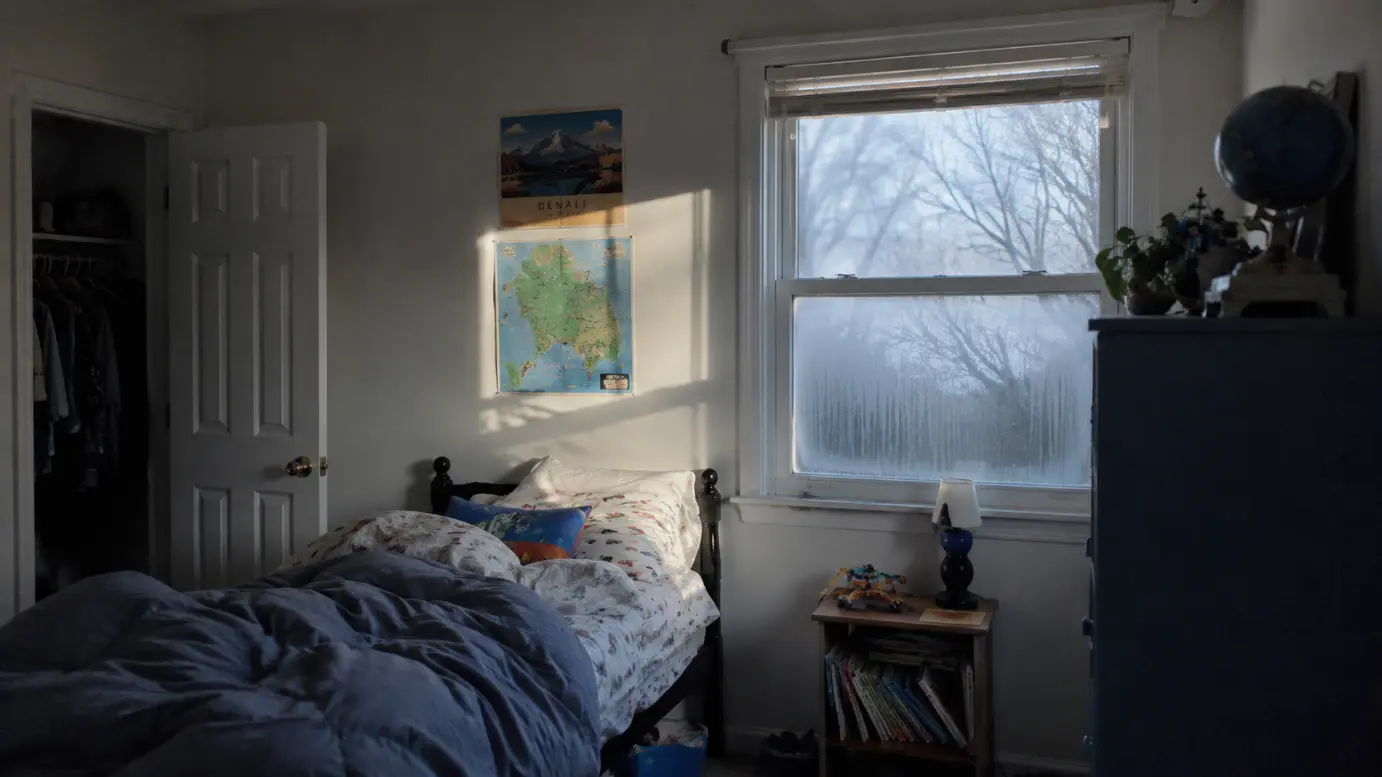
Real Questions Parents Ask About Bedroom Mold
Before getting into causes and prevention, here are direct answers to the questions parents ask most often. If you only have a minute, start here.
Is mold in my child’s bedroom actually dangerous?
It can be, and children are a more sensitive group than adults. Major scientific reviews by the World Health Organization and the U.S. Institute of Medicine found that living in damp, moldy homes is consistently linked to a range of respiratory problems. For children who already have asthma, the evidence is strong enough that reviewers have described damp indoor conditions as a likely cause of asthma flare-ups. There is also growing evidence linking early exposure to damp, moldy homes with children developing asthma in the first place. The honest caveat: scientists have not pinned down exactly which substance in mold drives these effects, and the link to developing asthma is considered probable rather than fully proven. What is clear enough to act on is that reducing dampness and mold reduces the health risk.
How do I know if there is mold in the bedroom if I cannot see any?
Trust your nose first. A persistent musty or earthy smell, especially one that is stronger when the room has been closed up overnight, is one of the most reliable early signals. Then look in the places mold prefers to hide: behind furniture against exterior walls, inside closets, around window frames, under the bed, and along the bottom edge of walls. Recurring condensation on windows, a closet that feels damp, peeling paint, or a child whose nighttime coughing or congestion eases when they sleep elsewhere are all worth taking seriously.
Why does mold keep coming back even after I clean it?
Because cleaning treats the symptom, not the source. If you remove visible mold but leave the moisture problem in place, the mold will almost always return. A leak, a condensation pattern, or chronically high humidity has to be fixed for cleanup to last. This is the single most common mistake parents make: they scrub the spot and consider it solved, while the conditions that grew it are still there.
Should my child sleep in a room with mold while I deal with it?
If there is visible mold growth or a strong musty odor and your child has asthma, allergies, or a weakened immune system, it is reasonable to move them to another room until the problem is addressed. For a sensitive child, reducing exposure while you fix the moisture and remove the mold is a sensible precaution. If symptoms are significant, talk to your child’s pediatrician.
Why Bedrooms Are Especially Vulnerable to Mold
Every type of mold has the same basic requirement. It needs moisture, and it needs something to grow on. Bedrooms quietly supply both.
Think about what a bedroom is made of. Carpet. Soft mattresses. Upholstered furniture. Fabric, paper, drywall, and clothing packed into closets. These are exactly the kinds of porous, absorbent materials that hold moisture and feed mold. Now add the conditions: doors closed at night, windows shut, furniture pushed flat against walls, and a sleeping person who exhales moisture into the air for hours at a time. Airflow drops, humidity climbs, and the warm damp pockets that mold loves start to form in corners and behind furniture.
Children’s bedrooms can be worse on this front, not better. Stuffed animals, laundry that does not always make it to the hamper, a closet crammed full, and a bed that sits low to the floor all reduce airflow and trap dampness. A child’s room is often the most cluttered and least ventilated room in the house, which is the opposite of what keeps mold away.
The moisture itself usually comes from one of a handful of sources:
- Condensation. Warm, humid indoor air meets a cold surface, usually a window or a poorly insulated exterior wall, and water forms. This is why mold so often appears around window frames and on the wall behind a dresser.
- Leaks. A roof leak above a bedroom, a pipe in the wall, or water seeping in around a window can soak building materials silently for weeks.
- Poor ventilation. A room that is closed up and never gets fresh airflow holds onto whatever moisture builds up inside it.
- High indoor humidity. In humid climates, or in any home without adequate humidity control, the air itself carries enough moisture to feed mold without any leak at all.
By the time you can see it or smell it, mold has usually been growing for a while.
The Warning Signs Worth Catching Early
Early detection is the difference between a ten-minute wipe-down and a wall that has to come out. Mold problems get more expensive and more disruptive the longer they go unnoticed, so it pays to know what to watch for.
| Warning Sign | Where to Look | What It Usually Means |
|---|---|---|
| Musty or earthy odor | Strongest in closed-up rooms and closets, first thing in the morning | Active mold growth, often hidden. The most reliable early signal. |
| Dark spots or discoloration | Walls, ceilings, around window frames, behind furniture | Visible growth or a developing moisture stain. |
| Condensation on windows | Lower corners of window panes, especially in cold weather | Indoor humidity is high enough to feed mold. |
| Damp closets or belongings | Closet walls, clothing, stored items, the backs of drawers | Trapped moisture and poor airflow. |
| Peeling paint or warping | Walls, baseboards, window sills | Water damage behind or beneath the surface. |
| Symptoms that ease elsewhere | Your child’s nighttime cough, congestion, or wheeze | A possible link between the room’s air and how your child feels. |
That last row deserves attention. If your child coughs at night, wakes congested, or has allergy-like symptoms that improve when they spend time away from their bedroom, the room itself is worth investigating. It is not proof of mold, but it is a clue worth following.
What the Research Actually Says About Mold and Children
This is the part where it is easy to find scary, exaggerated claims online. Here is the careful version, drawn from the most authoritative reviews available.
Two of the most respected scientific bodies in the world, the U.S. Institute of Medicine and the World Health Organization, each reviewed the available research on damp, moldy buildings and health. Both concluded that the presence of dampness and mold in homes is consistently associated with increased respiratory problems. These include allergy symptoms, coughing, sneezing, wheezing, irritation of the eyes, nose, throat, and lungs, and worsening asthma.
For children specifically, two findings matter most:
- Mold reliably makes existing asthma worse in children. A major review of the evidence concluded that the link between damp, moldy conditions and asthma flare-ups in children is strong enough to suggest a genuine cause-and-effect relationship. In plainer terms: for a child who already has asthma, a damp, moldy bedroom is likely to set off more attacks.
- Early exposure is linked to children developing asthma. Several long-term studies that followed children over years found that those living in damp, moldy homes were more likely to develop asthma, in some cases more so the worse the dampness was. This connection is considered probable rather than fully settled, but it is consistent enough that experts treat reducing home dampness as a sensible protective step.
Why are children more affected than adults? They breathe faster relative to their size, their lungs and immune systems are still developing, and in a bedroom they spend long, uninterrupted hours in close contact with whatever is in the air. None of that is cause for panic. It is cause for paying attention to the room your child sleeps in.
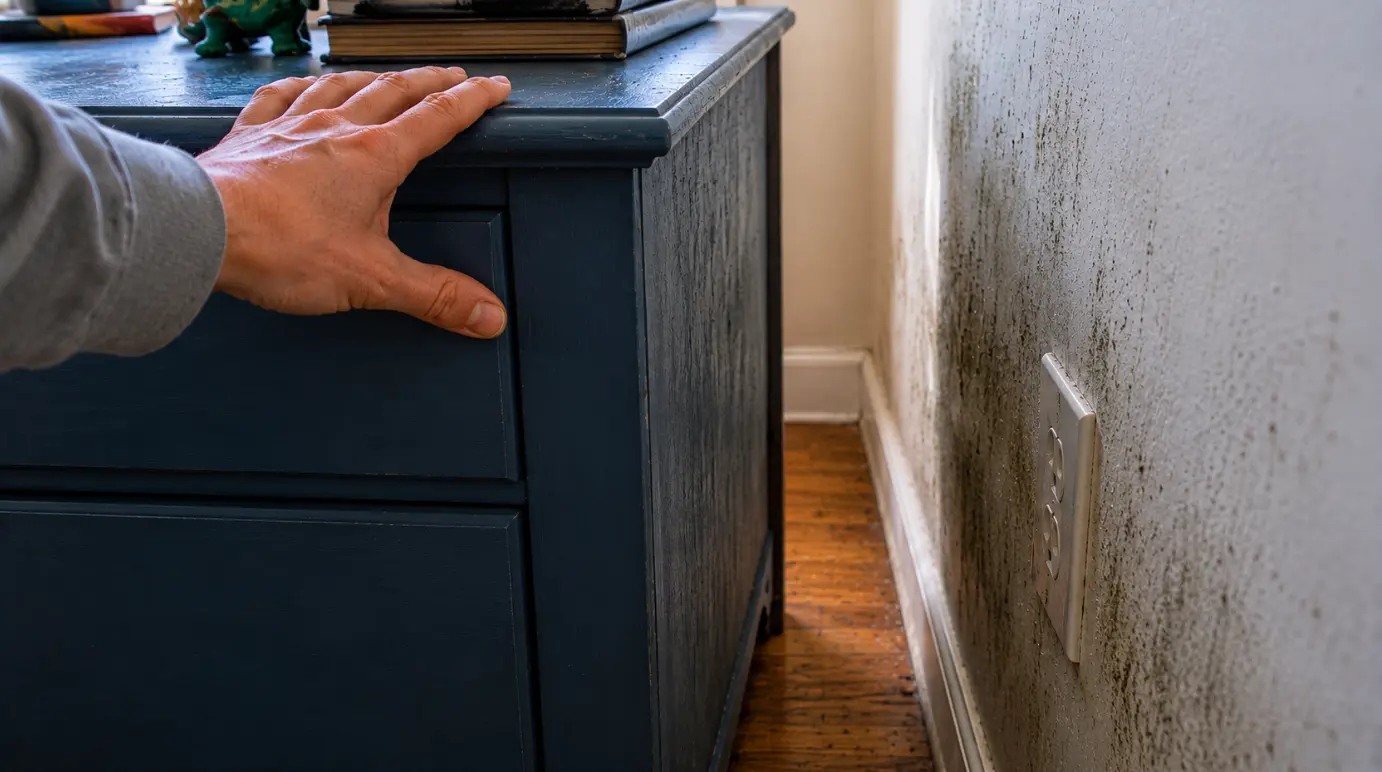
How to Prevent Mold in Your Child’s Bedroom
Prevention comes down to one principle applied in several places: keep the room dry and keep the air moving. None of these steps are expensive or complicated, and most take minutes.
- Keep indoor humidity below about 50 percent. The EPA recommends keeping indoor humidity below 60 percent, and ideally between 30 and 50 percent. An inexpensive humidity meter from a hardware store tells you where you stand.
- Improve airflow and ventilation. Open a window when weather allows, run a fan, and avoid keeping the door shut all day. Stagnant air is mold’s friend.
- Fix leaks quickly. A roof, window, or plumbing leak above or near a bedroom should be treated as urgent, not a someday project.
- Use a dehumidifier or air purifier if needed. In humid climates or naturally damp rooms, a dehumidifier does the heavy lifting your ventilation cannot.
- Keep furniture slightly away from walls. A few inches of gap, especially on cool exterior walls, lets air circulate and prevents the trapped, damp pockets where mold starts.
- Avoid damp clothing and clutter buildup. Wet towels, sweaty sports gear, and overstuffed closets all add moisture and block airflow. Let things dry before they go away.
- Dry any spill or wet material within 24 to 48 hours. This is the EPA’s stated window. Dried within a day or two, most surfaces will not grow mold. Left longer, they often will.
If something gets wet, dry it within 24 to 48 hours. That single habit prevents more mold than any cleaning product ever will.
How to Clean Up Bedroom Mold Safely
If you find mold, the right response depends on how much there is and what it is growing on. The EPA’s guidance is the standard worth following.
Small areas on hard surfaces
For a small patch on a hard, non-porous surface such as glass, sealed wood, or a finished wall, the EPA recommends scrubbing the mold off with detergent and water, then drying the surface completely. You do not need harsh chemicals. In fact, the EPA specifically advises that using bleach or other biocides is not recommended as a routine practice for mold cleanup. Plain detergent and water, followed by thorough drying, does the job for most small jobs. And always fix the moisture source, or the mold will return.
Porous materials
Porous and absorbent materials are a different story. Drywall, insulation, carpet, ceiling tiles, mattresses, and upholstered furniture can hold mold deep in spaces and crevices you cannot reach. The EPA notes these materials often have to be thrown away if they become moldy, because the mold cannot be completely removed. A moldy mattress in a child’s room is not worth saving.
Large or recurring problems
The EPA suggests that if the moldy area is larger than about 10 square feet, roughly a three-foot by three-foot patch, or if there has been significant water damage, you should consider professional help. The same goes for mold you suspect is hidden inside walls or in the HVAC system, or any situation where a family member has health concerns. Disturbing hidden mold without care can release a large burst of spores into the air, which is the opposite of what you want in a child’s bedroom.
When to Test, and Why Independence Matters
If you can see mold, you generally do not need a test to confirm it. You need to clean it up and fix the moisture. The EPA itself notes that when visible mold is present, sampling is usually unnecessary.
Testing earns its place in the harder cases: when there is a persistent musty smell but no visible source, when a child has unexplained respiratory symptoms and you want to know whether the air is a factor, when you suspect hidden mold inside walls, or when you simply want to know what you are dealing with before deciding how to respond. In those situations, a professional assessment turns guesswork into answers.
Here is where independence matters. AirMD performs independent mold testing and does not perform remediation. A company that profits only from testing, and not from the cleanup work, has no reason to inflate a problem or recommend repairs you do not need. You get an honest assessment of what is actually there, and you stay in control of what happens next.
The Bottom Line for Parents
Your child’s bedroom should be the safest, most restful room in the house. A quiet mold problem can undermine that without anyone noticing, because the exposure happens in the dark, over hours, while a child sleeps.
The good news is that the same simple principle solves almost all of it. Control the moisture and you control the mold. Keep humidity in check, keep air moving, fix leaks fast, dry wet things within a day or two, and pull the furniture a few inches off the walls. Catch the warning signs early, clean up small problems the right way, and bring in independent testing when you genuinely need answers rather than guesses. Do that, and you protect the air your child breathes for a third of every day.
Frequently Asked Questions
What humidity level prevents mold in a bedroom?
Keep indoor humidity below 60 percent, and ideally between 30 and 50 percent. A small humidity meter from a hardware store lets you monitor it.
What are the first signs of mold in a child’s bedroom?
A persistent musty or earthy odor is usually the earliest sign, often before any mold is visible. Other early signs include condensation on windows, dark spots near window frames or behind furniture, damp closets, and peeling paint.
Can mold in a bedroom affect a child’s health?
Yes. Damp, moldy indoor environments are consistently linked to respiratory problems in children, including allergies, coughing, sneezing, and worsening asthma. The evidence is strong that mold worsens asthma in children who already have it.
Does bedroom mold cause asthma in children?
Mold reliably worsens existing asthma in children. Several long-term studies also link early exposure to damp, moldy homes with children developing asthma, though scientists consider this connection probable rather than fully proven.
How do I clean a small amount of mold off a bedroom wall?
Scrub it with detergent and water, then dry the surface completely. The EPA does not recommend bleach or other biocides for routine mold cleanup. Always fix the moisture source, or the mold will return.
Do I need to replace a moldy mattress or carpet?
Often, yes. Porous materials like mattresses, carpet, drywall, and insulation can trap mold in spaces that cannot be fully cleaned, so they frequently need replacement once moldy.
When should I call a professional for bedroom mold?
Consider professional help when the moldy area is larger than about 10 square feet, when there has been significant water damage, when you suspect hidden mold inside walls or the HVAC system, or when a family member has health concerns.
Do I need a mold test if I can already see the mold?
Usually not. The EPA notes that when visible mold is present, testing is generally unnecessary. Testing is most useful for persistent musty odors with no visible source, suspected hidden mold, or unexplained health symptoms.