


You have lived in the Stuart house long enough to know its moods. The back bedrooms on the shaded side feel close by August and never quite dry out. One person in the family wakes up stuffy and clears by mid-morning, and you cannot tell whether it is the house, the season, or the pollen that coats the car every day. You have run an extra fan, changed the filter, maybe bought a plug-in purifier that promised to fix all of it. What you still do not have is an answer. An indoor air quality test measures what is actually in the air you breathe at home. It is only worth taking, though, if the person doing the testing has no product to sell you when the results come back.
What an indoor air quality test actually measures
An indoor air quality test in Stuart is a measurement of what is in your home’s air on a specific day. A technician samples the air, and where it helps, the surfaces, and sends what is collected to an accredited laboratory. Most residential IAQ testing looks at four things: mold spores, volatile organic compounds, airborne particulates, and the moisture and humidity conditions that feed the first three. The indoor readings are compared against an outdoor control taken the same day, because a number inside your home only means something against the air just outside your door. You receive a written report of what was found, at what level, and how it compares to outside.
People use a few phrases for the same work. Indoor air quality testing, air quality testing, and an IAQ assessment all describe this: sample the air, run the lab analysis, compare against outdoor, write the report. Here is what none of it includes. An indoor air quality test is not a cleaning. It is a measurement. AirMD tests and assesses. It does not clean your air, install equipment, or remove anything. The report is the product, and everything AirMD is paid to do ends when the findings are in your hands.
What the four measurements tell you
- Mold spores. Some spores are in every home’s air. The test identifies the type and counts the concentration, then compares indoors to outdoors, because that is what tells you whether growth is active and hidden rather than merely present.
- Volatile organic compounds. Gases that come off paint, new furniture, adhesives, and cleaning products. A screen shows whether they are elevated indoors.
- Airborne particulates. Fine particles: dust, combustion byproducts, pollen tracked in from outside.
- Humidity and moisture. The condition that lets mold and dust mites thrive. In Stuart it is usually the moisture, not the mold, that tells the story first.
Symptoms that travel, and symptoms that stay with the building
The most useful clue you have is free. Pay attention to where the symptoms go. If the congestion, the headaches, or the eye irritation ease when the family leaves for a weekend and come back within an hour of walking through the door, the pattern points at the building. If the same symptoms follow you to the office, to the car, and to a relative’s house two towns over, they point at something you carry with you rather than something in the home.
The Weekend Test
Leave the house for two nights and notice how everyone feels away from it. Then notice the first hour back. Symptoms that lift when you leave and return when you do are the ones a test can help explain. Symptoms that never change no matter where you are point somewhere else, and that is worth knowing before you spend a dollar.
What an independent IAQ assessment includes
An independent assessment is a measurement process, and none of it involves selling you a fix. Here is what the assessor does in a Stuart home.
- Walkthrough. The assessor looks and smells for moisture sources, water staining, and the rooms that hold humidity, and asks where and when symptoms show up.
- Air sampling. Measured-volume samples capture spores and particulates onto slides and cassettes, with an outdoor control taken the same day.
- VOC screen. A reading for the gases that come off building materials and household products.
- Humidity and moisture readings. Meters, and sometimes an infrared camera, find damp materials behind surfaces before mold shows on them.
- Laboratory analysis. An accredited lab identifies and counts what the samples caught. The lab, not a salesperson, produces the numbers.
- A written report. What was found, at what level, how it compares to outside, and where any moisture is coming from.
If the report shows a problem, it documents the case for one, and the cleanup is a separate company’s job. AirMD does not do that part, and that is the point of the next section.
Why who tests the air matters
The short answer is this: the value of a measurement depends on whether the person taking it profits from the result. A company that sells air purifiers, duct cleaning, or remediation has a reason to find a problem, because the test is the door to the sale. An independent assessor sells none of those things, so it is paid the same fee whether your air comes back clean or alarming. That is the whole reason to keep the testing separate from the fixing.
Where Florida law backs the separation
When an indoor air quality test finds mold, Florida draws the line for you. Mold assessors are licensed under Chapter 468, Part XVI. Florida Statute 468.8414 sets the licensure requirement for the mold assessor who performs the assessment, and Florida Statute 468.8419 adds a twelve-month bar: a firm that assesses a property for mold generally cannot also remediate that same property, and a firm that remediated it cannot then assess its own work, within a twelve-month window. That separation is a licensing rule with a statute number attached, not a marketing line.
An air quality test is only useful if the tester has no reason to sell you a cure.
| The conflicted model | The independent model |
|---|---|
| One firm tests and sells the fix | The assessor tests; a separate firm does any cleanup |
| Revenue depends on finding a problem | The fee is the same whether the air is clean or not |
| The test is a sales lead | The report is the deliverable |
| The seller grades their own product afterward | Any follow-up check is done by someone with nothing to sell |
What makes Stuart different
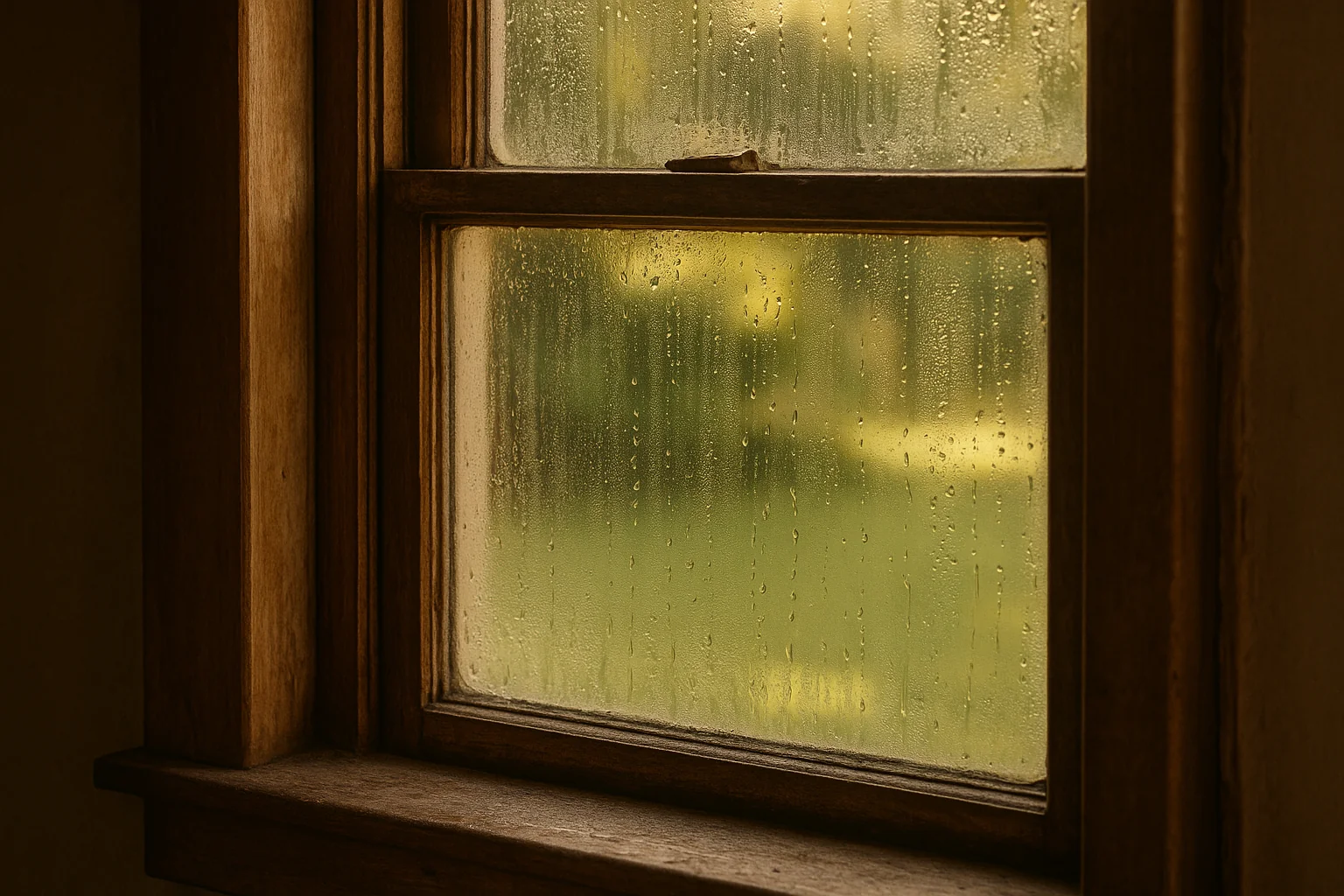
The Treasure Coast keeps the air wet. Stuart sits in a humid coastal band where the outdoor air rarely dries out, and the central air conditioning that keeps a home livable also creates cold surfaces where warm, wet air condenses. The back of a closet on an exterior wall, the space around a ceiling register, the duct that runs through a hot attic. Those are the quiet spots where moisture collects without a dramatic leak to announce it.
Stuart also has an older and more seasonal housing stock than the newer metros to the south. A home that sits closed up through a humid summer, or one built before current moisture standards, has more places for humidity and its byproducts to build. If you are buying, selling, or moving back in after water damage, a dated report gives you a record of the home’s air rather than a guess in a conversation. You can see the specific service and coverage on AirMD’s indoor air quality testing in Stuart page, and the broader indoor air quality testing service page explains the method in more depth.
Frequently asked questions
What does an indoor air quality test check for?
A residential indoor air quality test typically measures four things: mold spores, volatile organic compounds, airborne particulates, and humidity or moisture conditions. The indoor samples are compared against an outdoor control taken the same day, and an accredited laboratory identifies and counts what was collected. The result is a written report of what is in your air, at what level, and how it compares to outside. The test measures conditions; it does not clean the air or remove anything.
Does AirMD fix air quality problems?
No. AirMD tests and assesses only. It does not clean your air, sell purifiers or filtration, clean ducts, or remediate mold. That independence is the value: a firm that sells the fix has a financial reason to find a problem, while an independent assessor is paid the same whether your air is clean or not. When a test identifies mold, Florida licensing rules under Chapter 468, Part XVI keep the assessor and the remediator separate, so the company measuring your air has no stake in whether you need a cleanup.
How often should I test my home’s air quality?
There is no fixed calendar for it. Testing earns its keep when something changes: after water intrusion or a storm, before buying or selling, when symptoms track with being in the house, or to verify the air after a remediation. Rather than test on a schedule, test when a decision or a document depends on the answer, and keep the testing independent of anyone who would profit from the result.
If you are weighing indoor air quality testing in Stuart, start with the measurement and keep it independent. You can request an assessment through the Stuart indoor air quality testing page, and you will get a report you can act on, whichever way it reads.